Titanium

A critical metal supported by strong demand fundamentals for TiO₂.

Most titanium dioxide (TiO₂) goes into the pigment industry, where high-grade feedstocks are in short supply. The overall titanium market is growing at 3.7% pa. Titanium metal specifically is highly sought after due to its high strength to weight ratio, and its demand is expected to outpace GDP growth.

Overview

Titanium is a lightweight, high strength and corrosion resistant metal used in aerospace, defence, industrial, medical and clean technology applications. It combines steel like strength with much lower density, making it ideal where performance, weight and durability are critical.

Demand for titanium dioxide (TiO₂) is driven both by traditional uses such as pigments and coatings and by structural growth in high performance alloys, advanced manufacturing and energy transition infrastructure, including offshore wind and other low carbon technologies.

The market for titanium is growing and it is on the critical minerals list in the US, UK, European Union, Australia and Japan. The total titanium dioxide market is valued at ~US$24 billion and consumption is expected to grow at 3.7% pa (Source: TiPMC).

Global titanium dioxide consumption

The market

The market is split between titanium dioxide pigments, titanium metal, and other uses. Titanium dioxide (89% of the market) is mainly used in paints, coatings, plastics, and paper, and there are few substitutes due to its superior optical properties. Titanium metal (7% of the market) is a critical metal and highly prized by defence, aerospace and medical industries due to its high strength, low weight and corrosion/temperature resistance.

  • Structural growth in aerospace, defence and advanced manufacturing supports long‑term demand for high‑grade titanium feedstocks and alloys.​
  • Global focus on resilient, diversified supply of critical minerals is increasing interest in reliable titanium projects located in tier‑one jurisdictions.​
  • Environmental and regulatory pressures on legacy production routes are sharpening the focus on projects that offer robust, efficient processing pathways and strong ESG credentials.

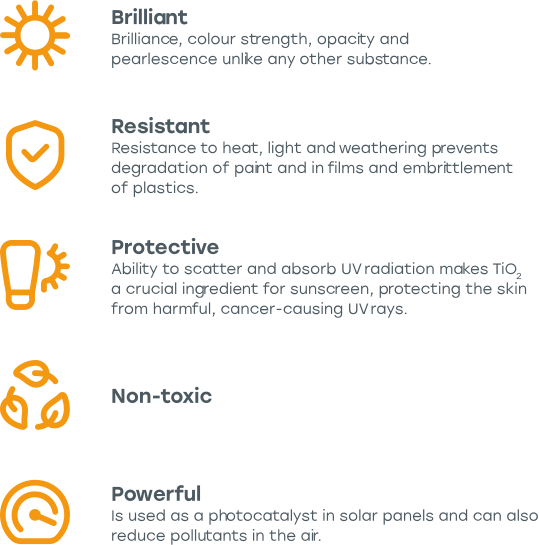
Valuable properties of titanium dioxide

Titanium supply today

Key facts

Ilmenite – supplying 90% of the world’s titanium – is sourced from either “hard rock” igneous deposits or from low-grade beach sand operations.

TiO₂ pigments are produced by two different processes: the sulfate process (~40%) using sulphuric acid and the preferred chloride process (~60%) which uses chlorine gas.

Feedstocks are graded and priced by their TiO₂ content, which ranges from ~50% TiO₂ (sulphate ilmenite) to 95% TiO₂ (natural rutile).

Hard rock ilmenite miners smelt the ore and produce a titania slag (>85% TiO₂).

Beach sand ilmenite is upgraded via costly and carbon intensive processes to synthetic rutile (>88% TiO₂) or otherwise sold as low-value sulphate ilmenite feedstock.

Many mineral sand deposits require management of radioactive wastes. This will not be a challenge at Pitfield.

Empire Metals’ Pitfield has the potential to offer a differentiated source of TiO₂ supply to the industry.


Stay in touch

Keep up to date with our news by subscribing to our email alerts

Partners & Awards